About us
SPARC grew out of the European Union’s cohesion policy — and a frustrating realisation. After decades of simplification efforts and genuine good intentions, the people the policy was meant to help still experienced administrative burden as overwhelming. Something in the standard approach was missing.
Research by our founders showed what. Administrative burden doesn’t come only from heavy workloads, delays or paperwork. It begins earlier — in how a policy is framed and understood. When rules and roles are ambiguous and expectations unclear, the burden is already there before a single form is filled in. And that burden has consequences we’ve since documented: it falls unevenly, quietly restricting some organisations’ access to policies more than others, and it erodes trust and satisfaction across the board.
This is why SPARC exists. We work to simplify public administration through research and collaboration — by focusing on the dimension most often overlooked: how administrative burden is actually experienced, in whatever policy it arises.
WHO WE ARE
That conviction is grounded in first-hand experience: SPARC’s founding directors have studied administrative burden and worked inside the institutions it affects, bridging research, public administration and European policy.
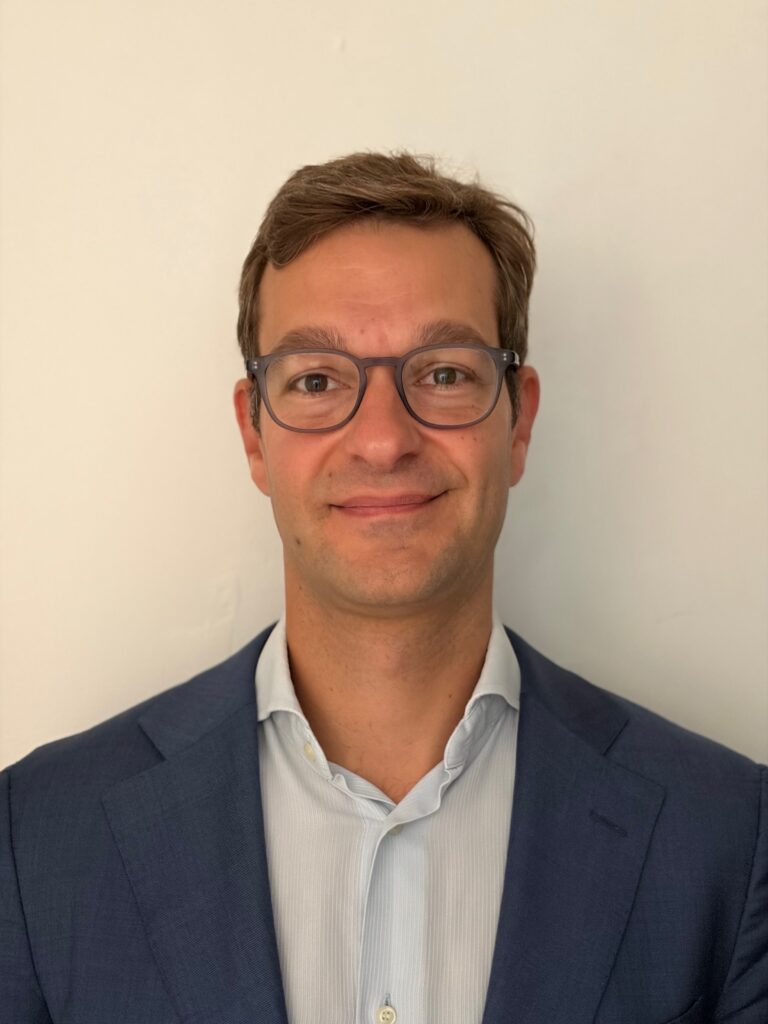
Fabian GAL
President
Fabian has spent years on a single question: why public administration stays burdensome despite constant efforts to simplify it. His doctoral research at the Université de Rennes traced the answer to how policy is perceived, not to workload alone — the conviction SPARC is built on, and the thread running through his published work on the simplification of EU cohesion policy.
His credentials span academia and practice across Europe: a researcher and country expert contributing studies and evaluations on EU regional policy for the European Commission and Parliament, including with the European Policies Research Centre; a practitioner inside public administration at the Auvergne-Rhône-Alpes Region and the European Committee of the Regions; and a lecturer in public policy at the University of Lyon. He works in German, Hungarian, English and French.
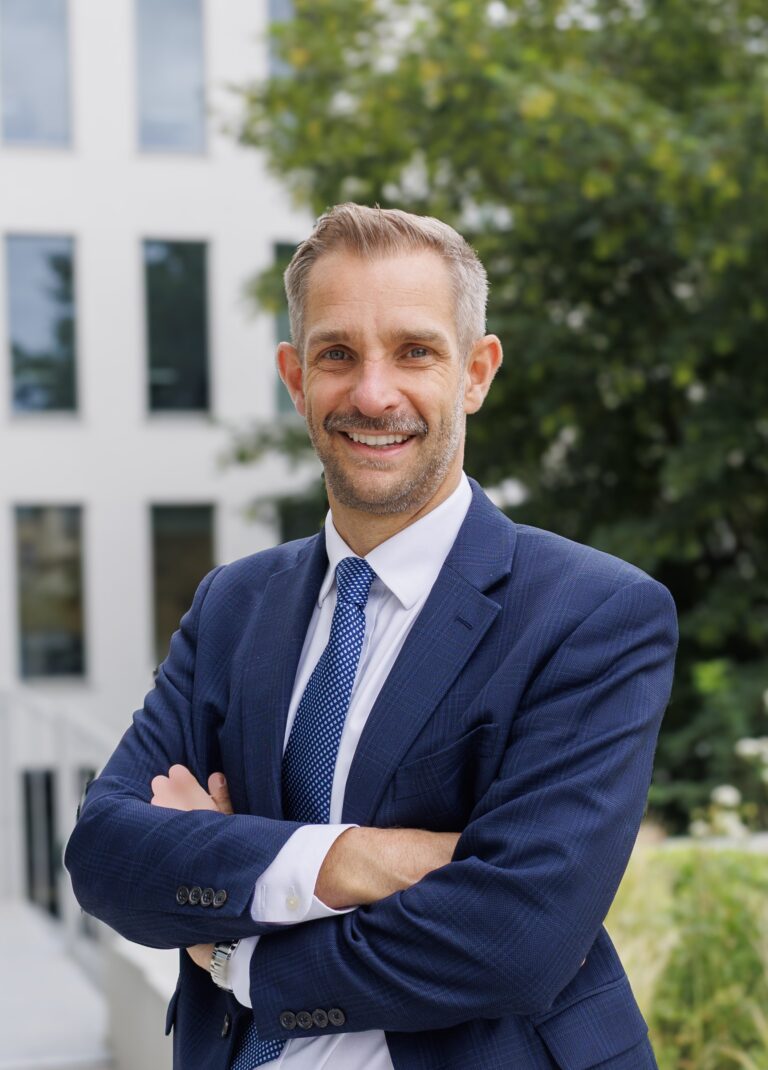
Sébastien BOURDIN
Treasurer
Sébastien brings deep academic authority on the questions at the heart of SPARC’s work. He is a Full Professor at IESEG School of Management, holds a Habilitation to Supervise Research, and is qualified as a university professor in economics, geography, and spatial planning. His research centres on public policy, economic geography and territorial development, with a long-standing focus on EU cohesion policy and the evaluation of public policy.
A prolific researcher, he combines quantitative rigour — spatial econometrics, modelling, data analysis — with qualitative methods, and has published extensively in leading regional-science and policy journals. He has also led applied research and evaluation projects for public administrations, bringing that scientific grounding directly to bear on real policy questions — the same bridge between research and practice on which SPARC is built.
Academic Council
SPARC’s research is guided by an Academic Council that safeguards the scientific quality and integrity of our work. Composed of independent academics and researchers of recognised standing, the Council guards the rigour and impartiality on which SPARC’s credibility depends.
The Council reviews and validates SPARC’s research strategy, advises on scientific priorities and methods, and helps connect our work to the wider research community. It upholds our Scientific Charter and ensures that our research direction is set by evidence and academic judgement, independent of any commissioned or client work. Its members serve independently and on a voluntary basis — a guarantee, to our partners and to the public, that SPARC’s research answers to the evidence alone.
Academic Council members
SPARC is currently constituting its Academic Council.
Governance
SPARC is a non-profit association under French law (loi 1901), governed by its members. Its structure is designed to keep authority accountable and its research independent. The General Assembly, comprising all members, is the association’s sovereign body: it elects the Board of Directors, which sets SPARC’s direction and oversees its activity. From within the Board, an Executive Committee — the President, Treasurer and Secretary — provides strategic leadership and day-to-day direction. Standing deliberately apart is the Academic Council: appointed by the Board but independent of it, free to advise on and scrutinise the scientific quality of SPARC’s work.
Our standards are set out in two documents — a Scientific Charter and an Ethics Charter.

Partnerships
SPARC works in cooperation with public administrations, universities and research institutions across Europe. These partnerships ground our work in practice and extend its reach — shaping research, opening access to the field, and turning findings into reform.
We are formalising partnerships with several institutions and will name them here shortly.
An expert network
Beyond its core team, SPARC draws on a network of researchers and practitioners who contribute their expertise to specific projects — in public administration, policy evaluation, digitalisation, AI in public administration, and the territorial implementation of public policy. This pool lets SPARC assemble the right expertise for each question it takes on, and widens its perspective well beyond any single discipline.
SPARC is always open to new collaborations. If you represent an institution interested in working with us, or you’d like to contribute your expertise, we’d be glad to hear from you.